01
Pixel-true
The art is hand-drawn pixel art. Every sprite and room had to keep hard pixel edges at any window size.
01 / Selected work
Index 01 / 19
Creative Development · 2026 · Game localization agency, Berlin
View live site02 — Why it existed
Context
Gamer Minds is a game localization agency run by people who care about games. They work with developers and publishers to make a game feel as natural, funny and memorable in another language as it does in the original.
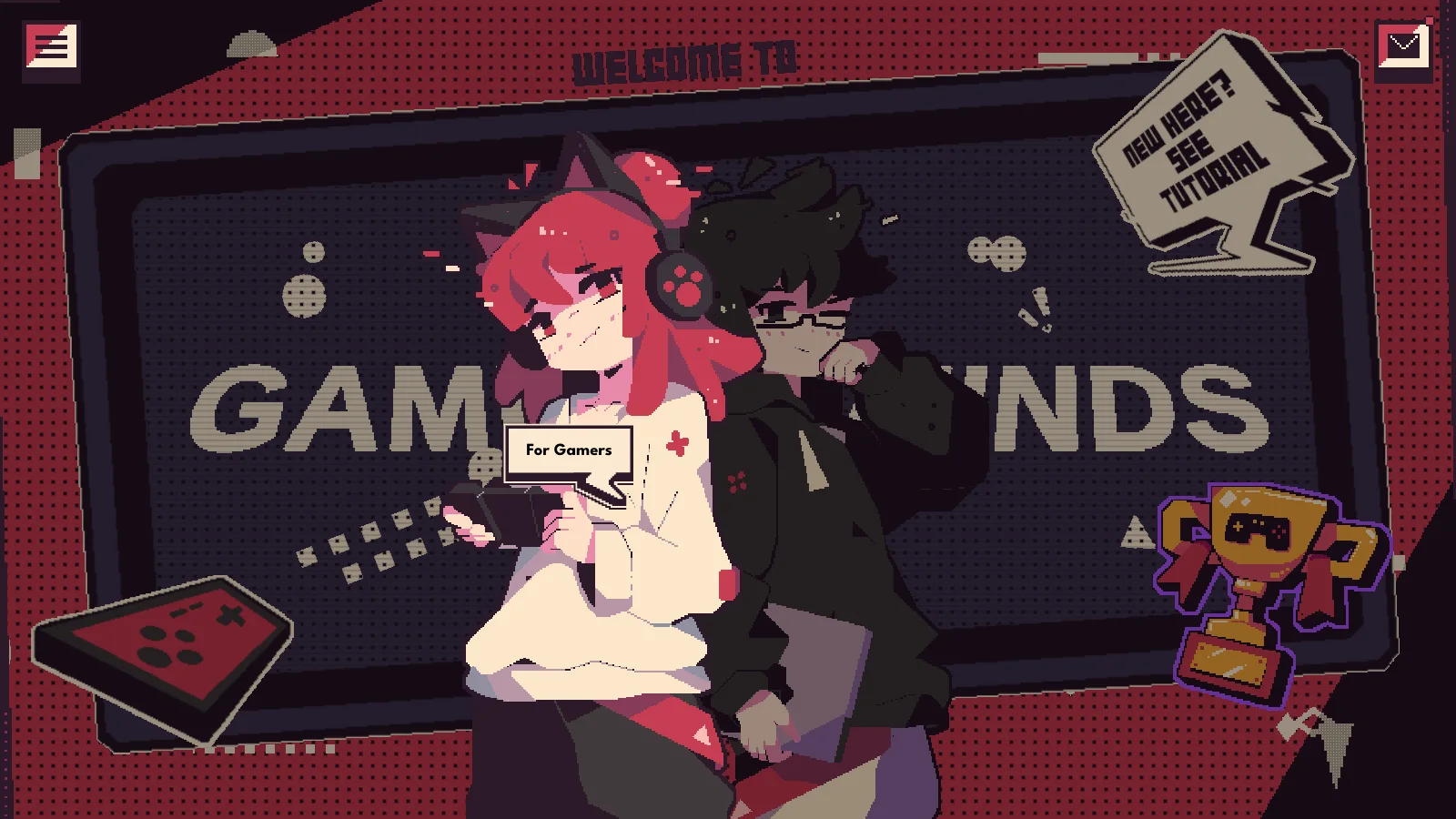
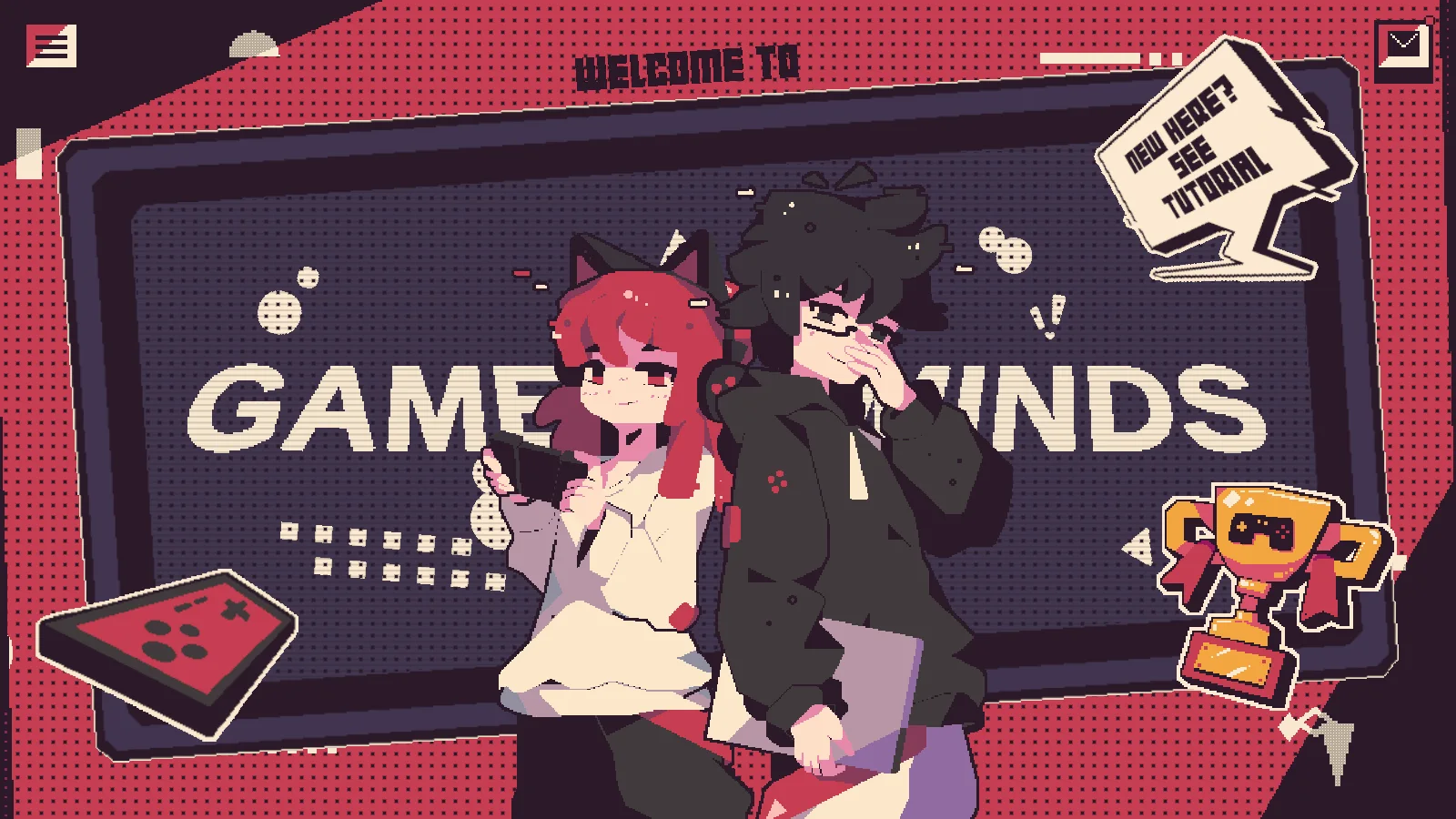
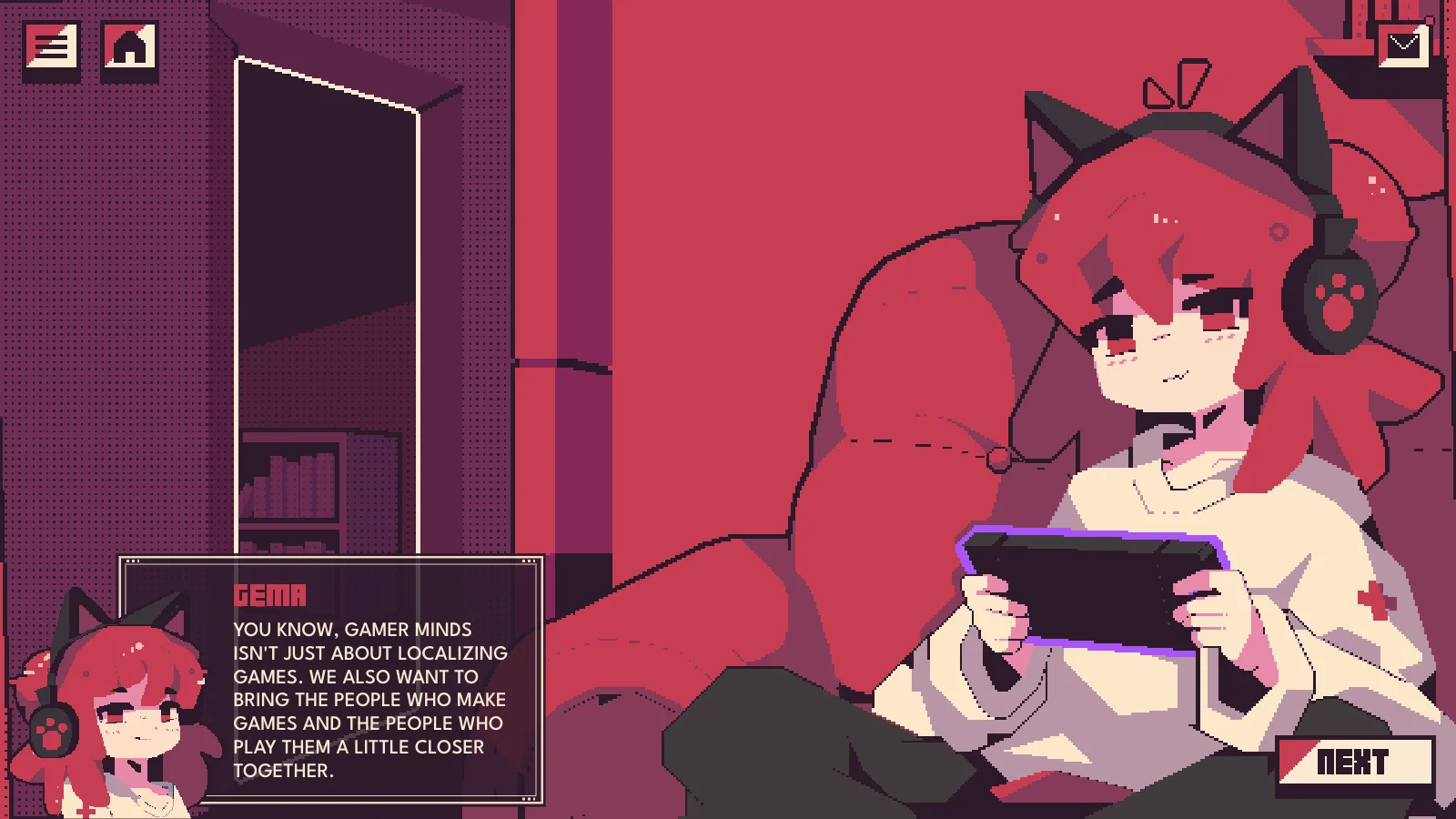
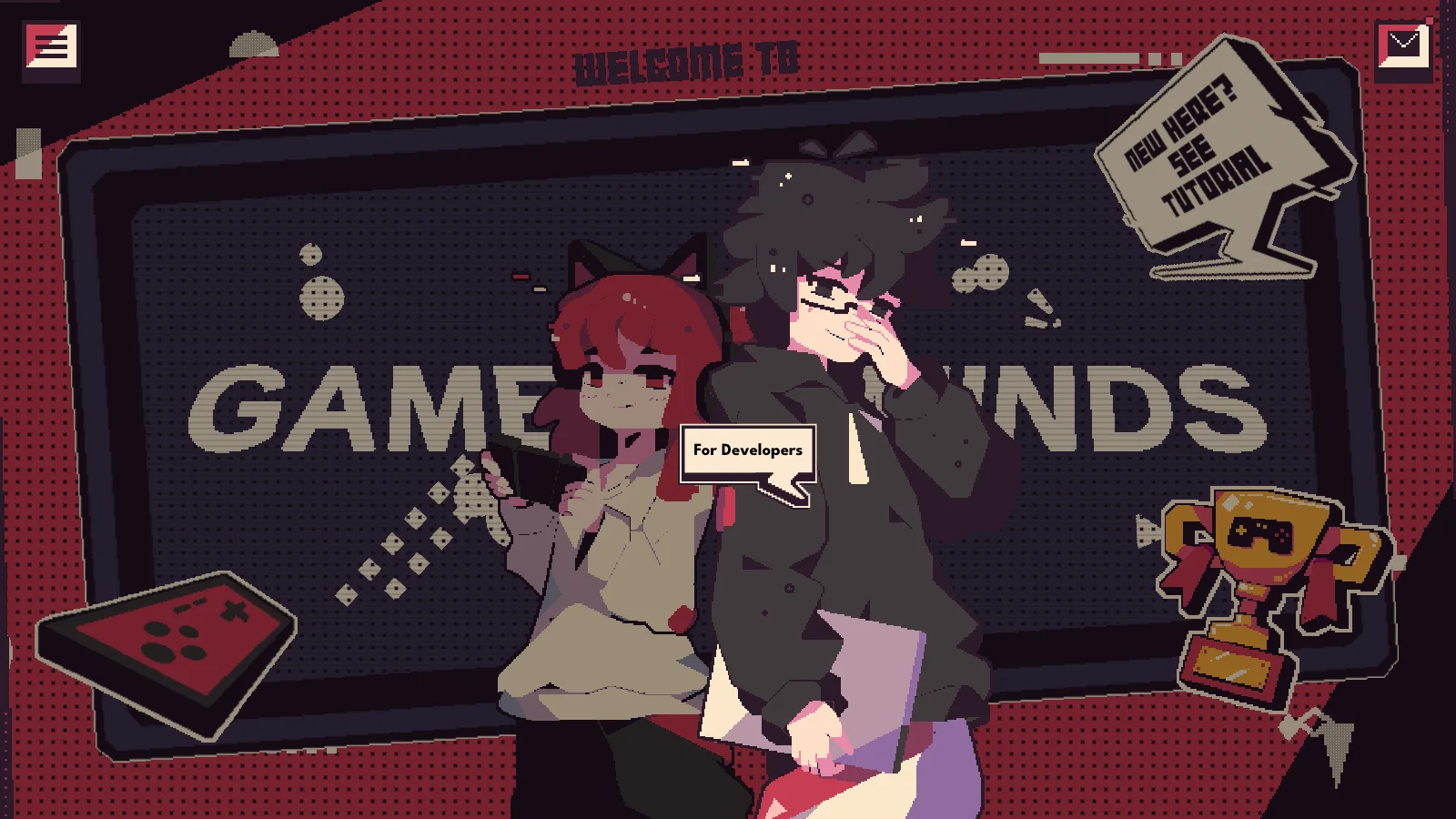
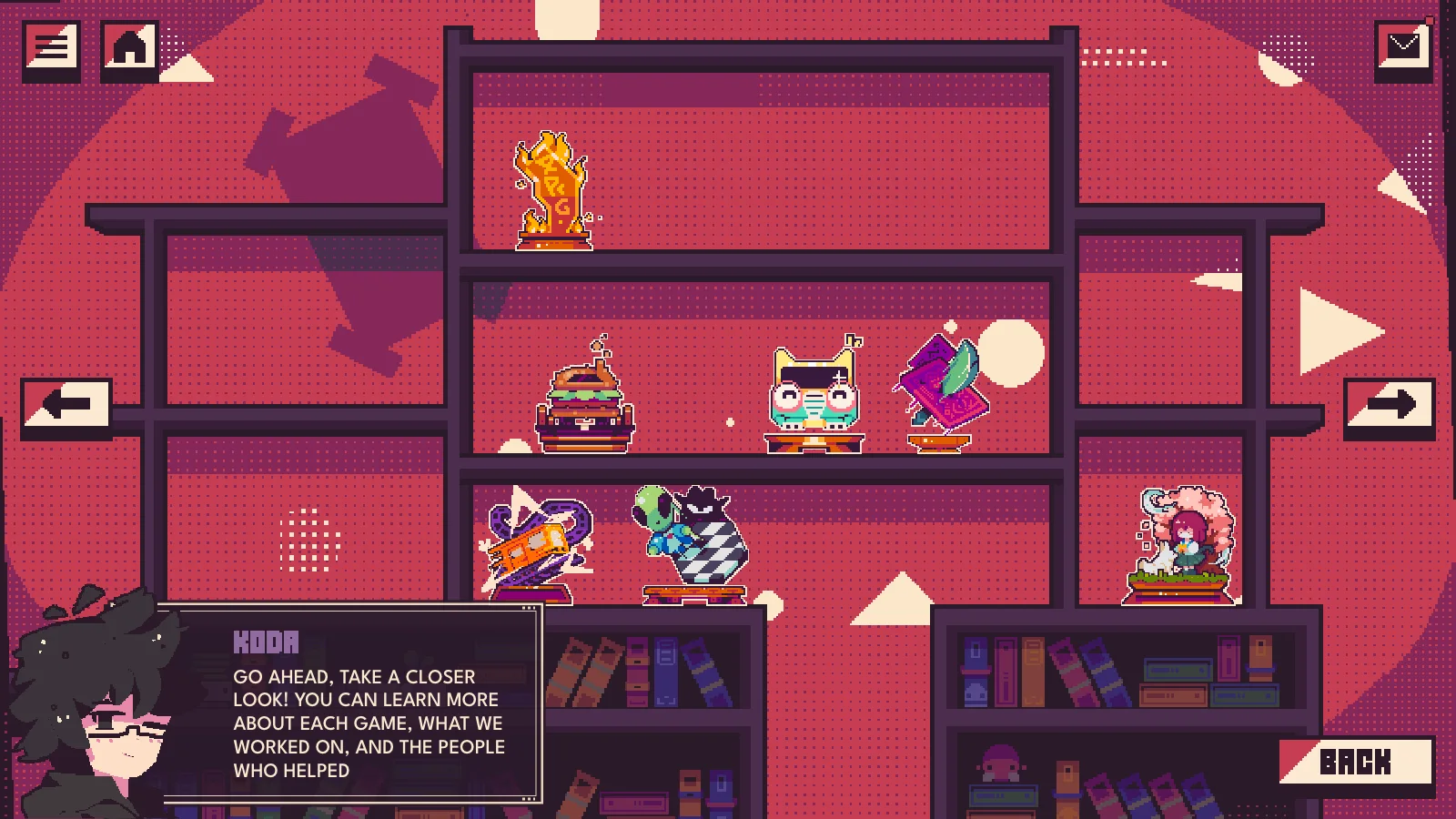
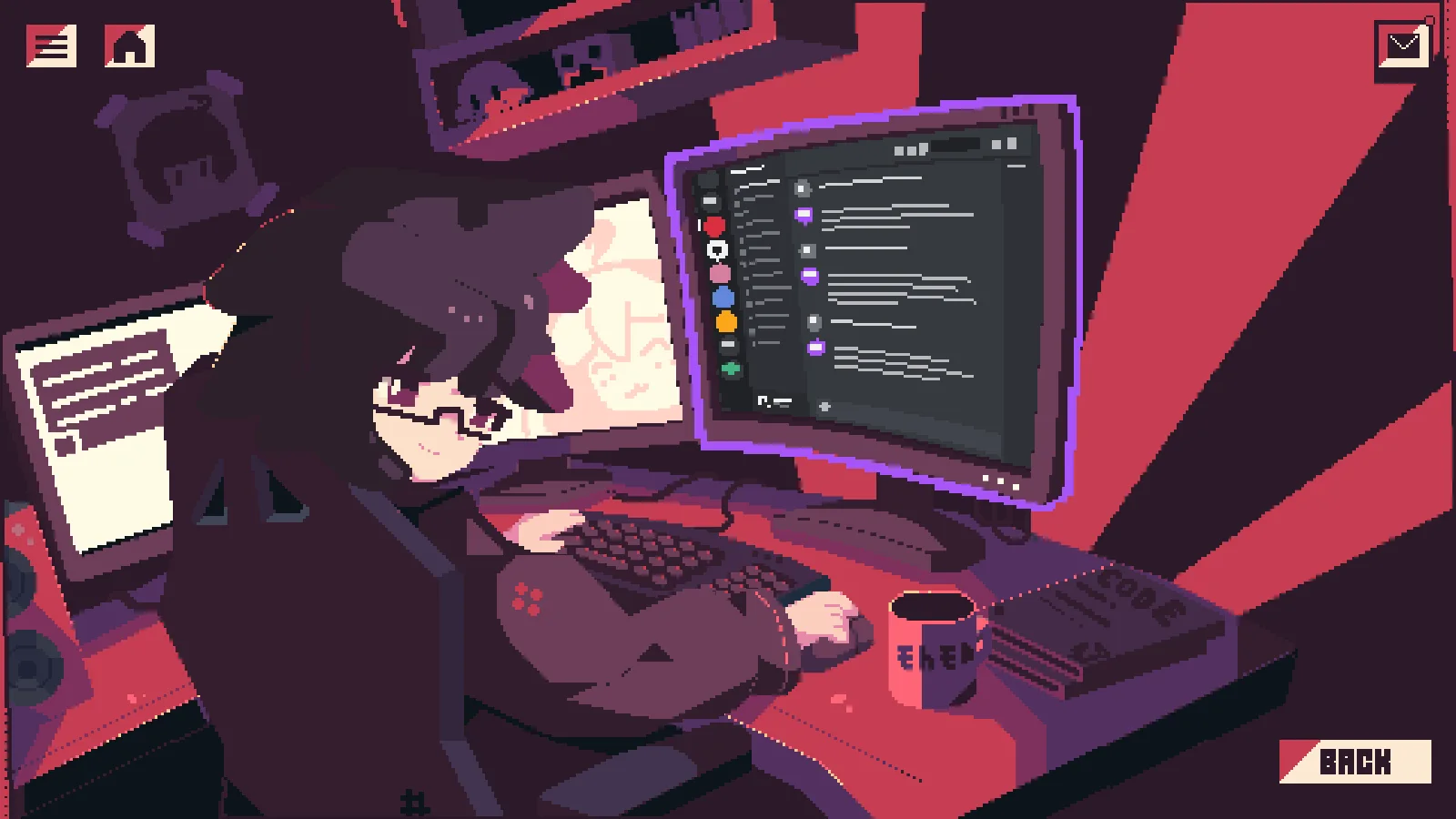
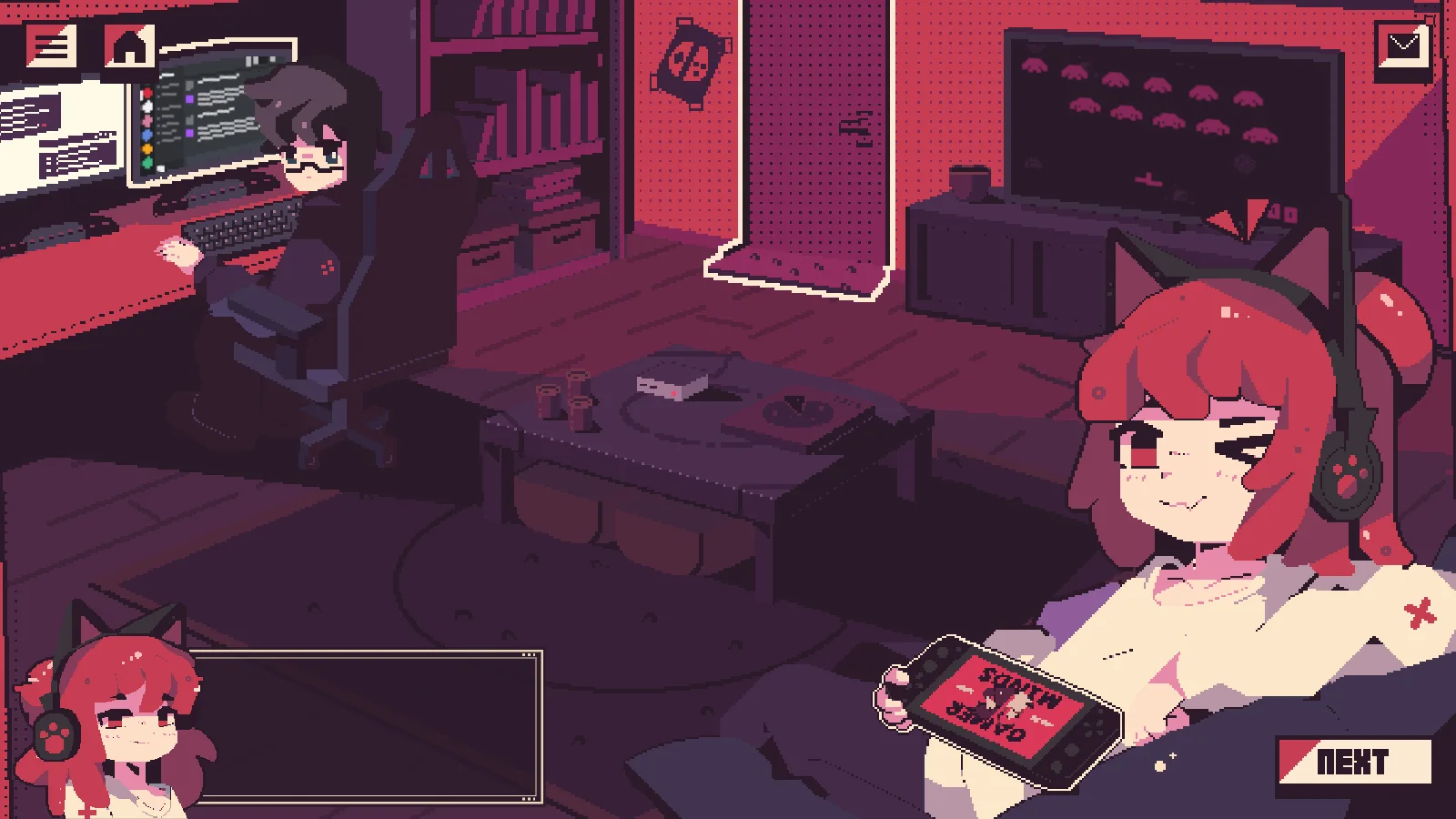
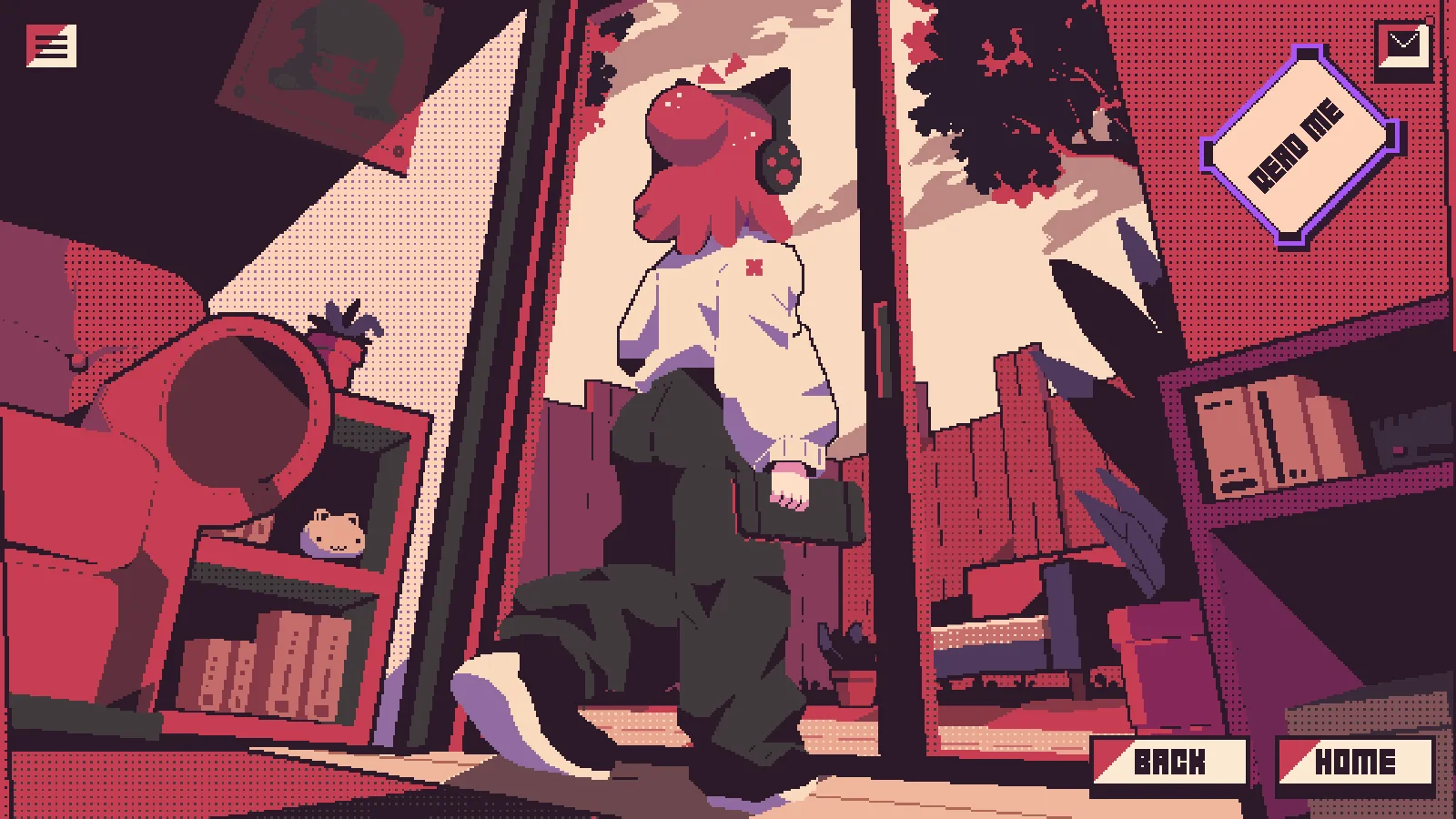
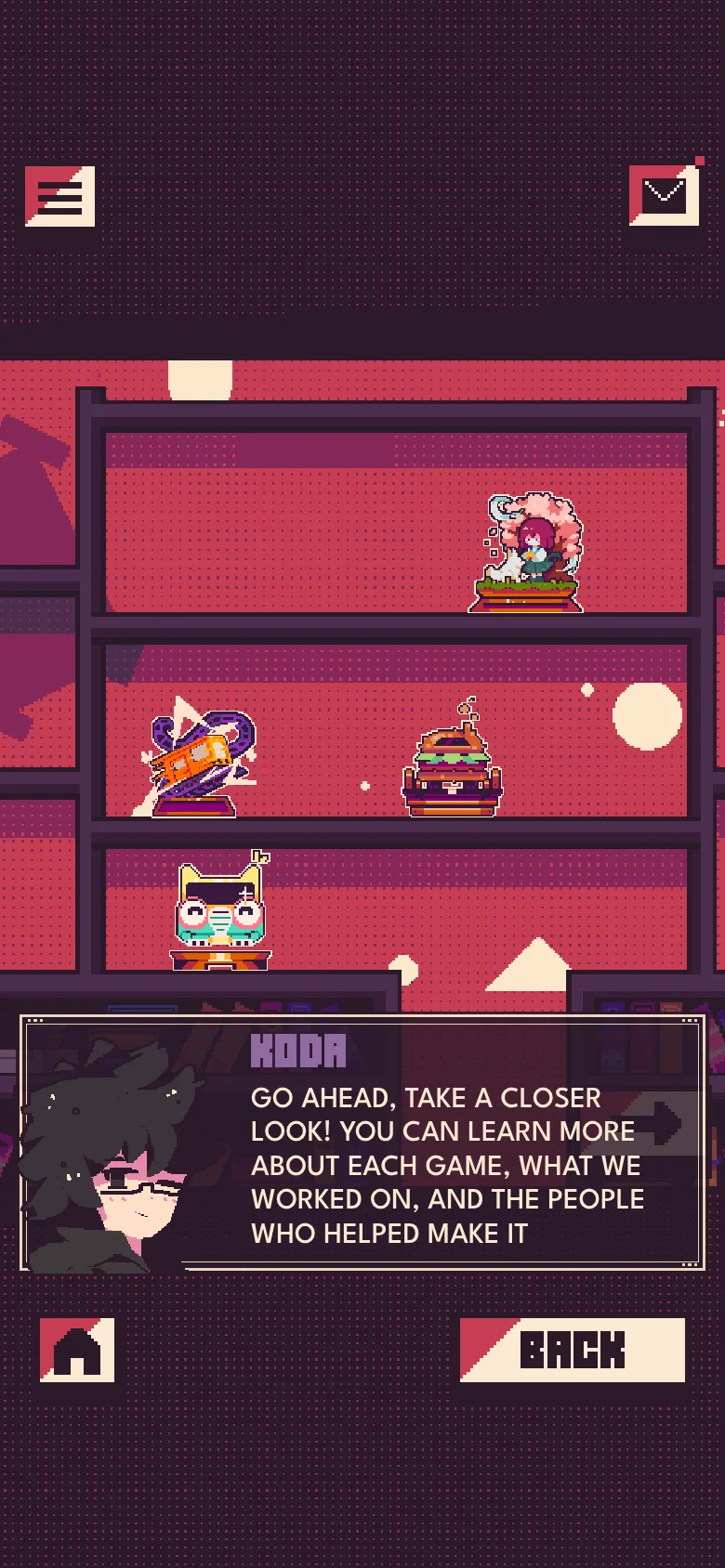
A site for that audience could not read like a brochure. So it plays like a small point-and-click game: two characters, a living room, a trophy shelf, a handheld console — and the agency’s story surfaces as you explore.
03 — The brief
01
01
The art is hand-drawn pixel art. Every sprite and room had to keep hard pixel edges at any window size.
02
Every scene needed its own URL, shareable and reloadable, with browser Back and Forward walking the journey.
03
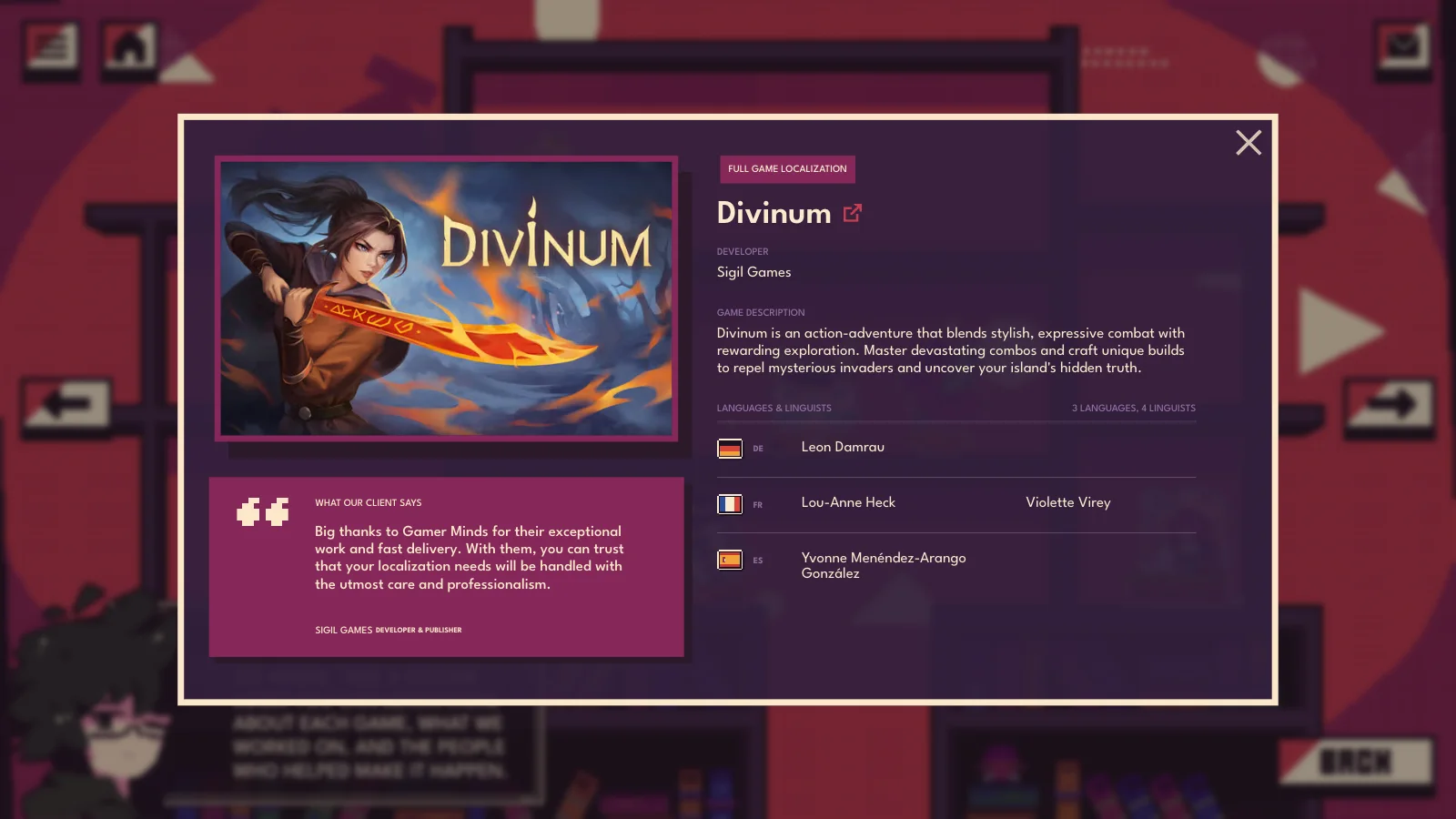
Dialogue, trophies, testimonials and the screens inside the rooms had to be changed by the team, not a developer.
04 — First encounter
Boot sequence
01 — First impression
The first load of the home page plays a BIOS-style boot: a log types out, a progress bar fills, and a CRT shut-off flashes into the scene.
Then the portal shrinks into place, the two characters slide up from below, the title spreads apart and the console, tutorial bubble and trophy pop in.
05 — The idea
Creative logic
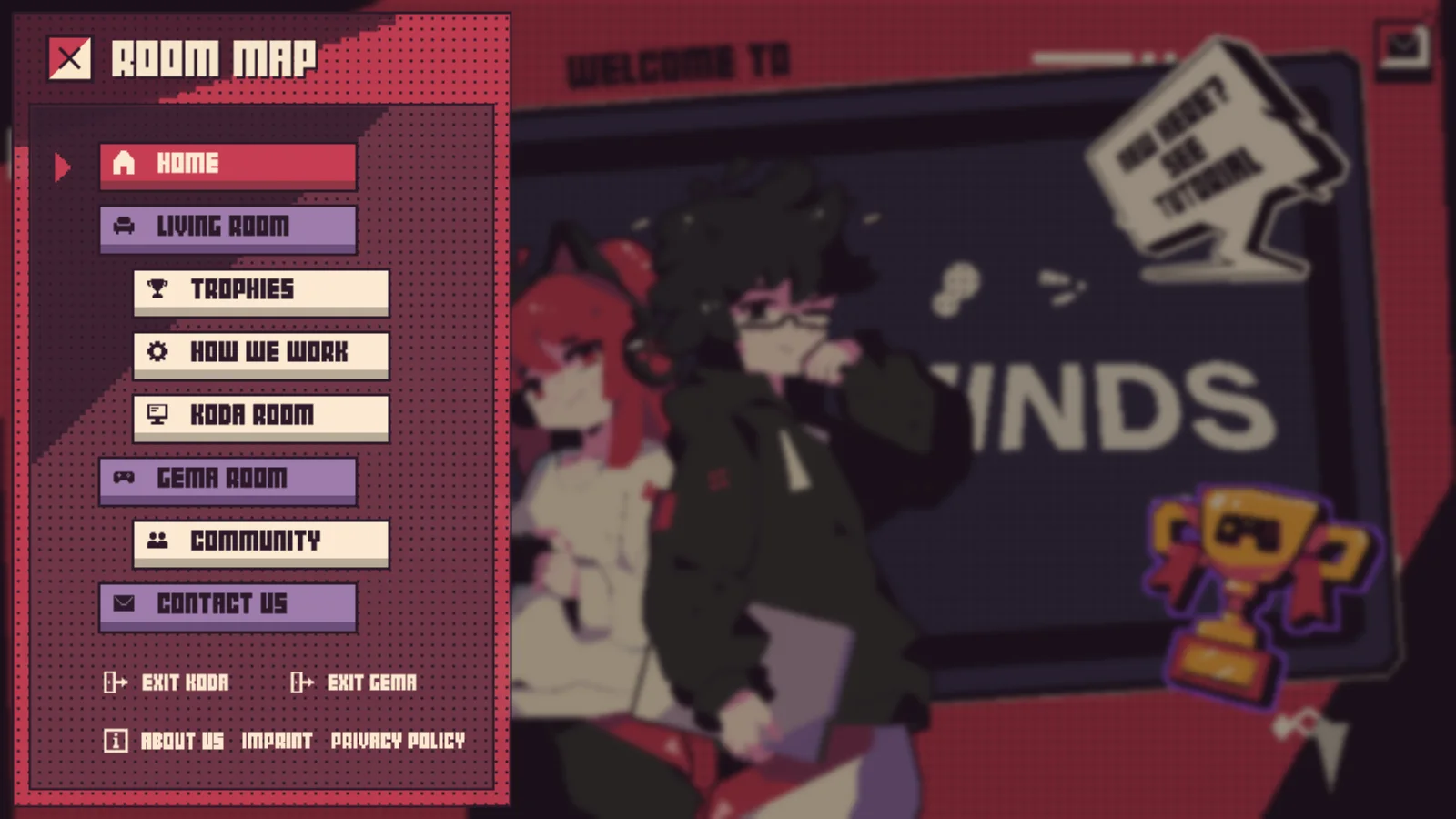
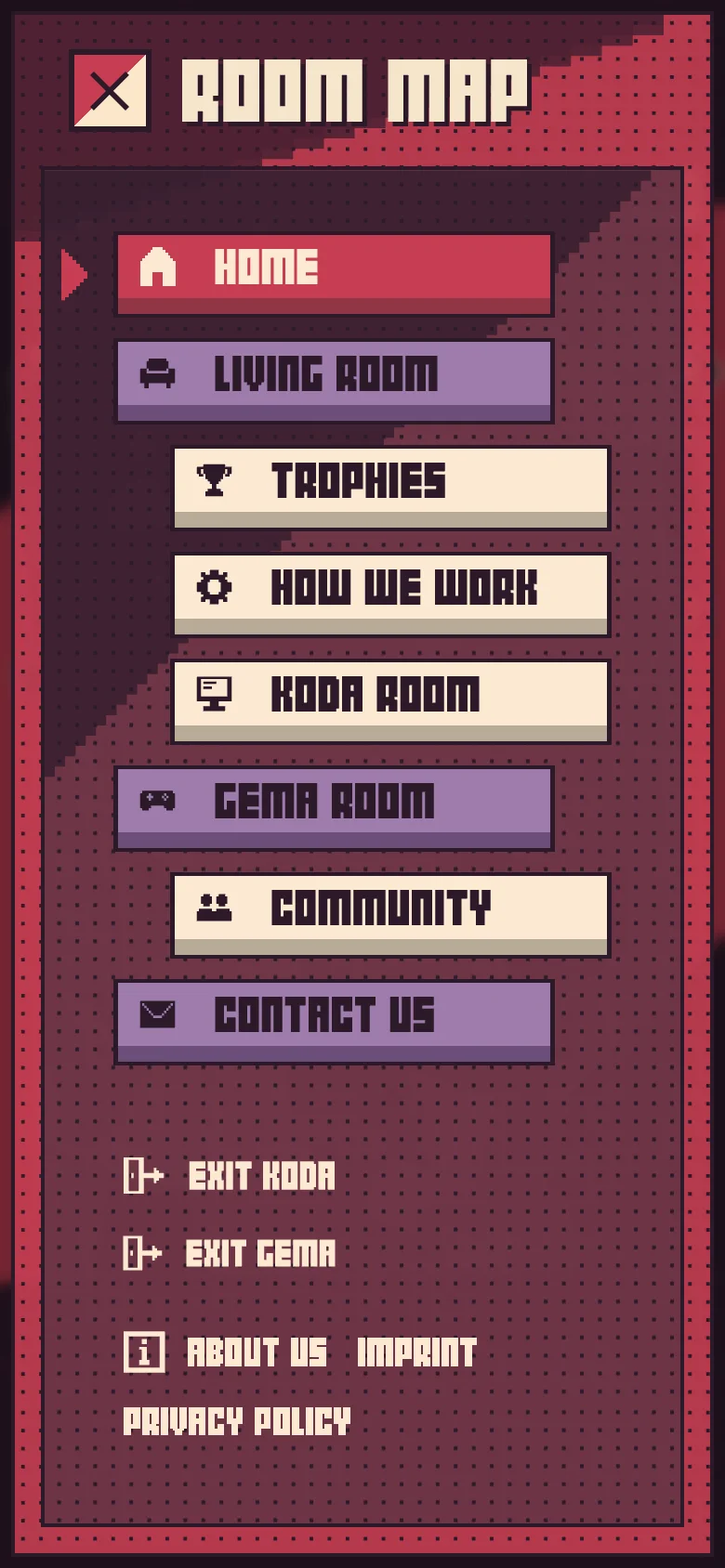
Navigation is the scene itself. Gema and Koda each lead to their own side of the story, and every object that reacts to the cursor goes somewhere.
01 — Meet
Hover a character and a speech balloon says who they speak for.
02 — Enter
Click one and a pixel-stair wipe carries you into their room.
03 — Explore
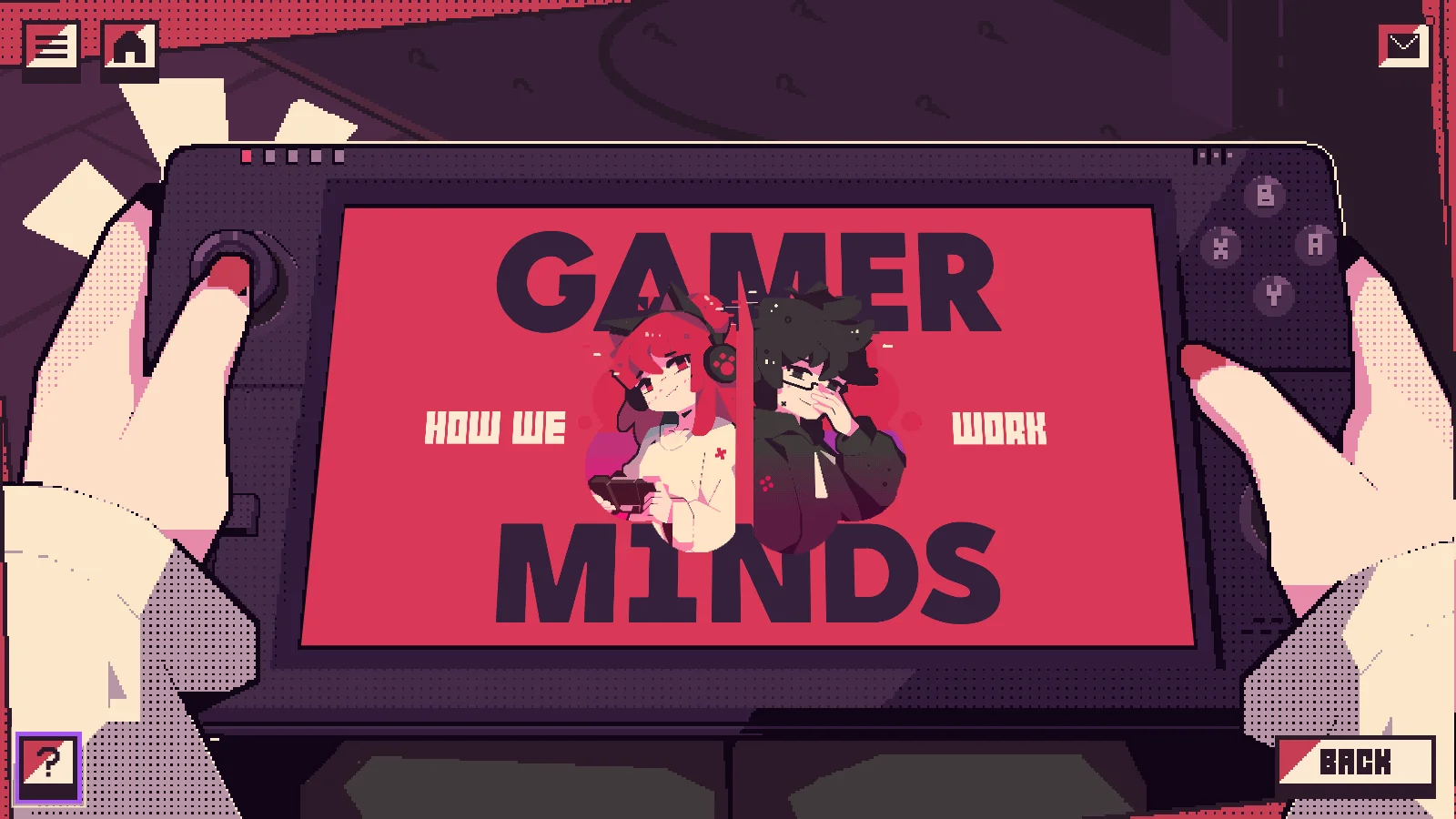
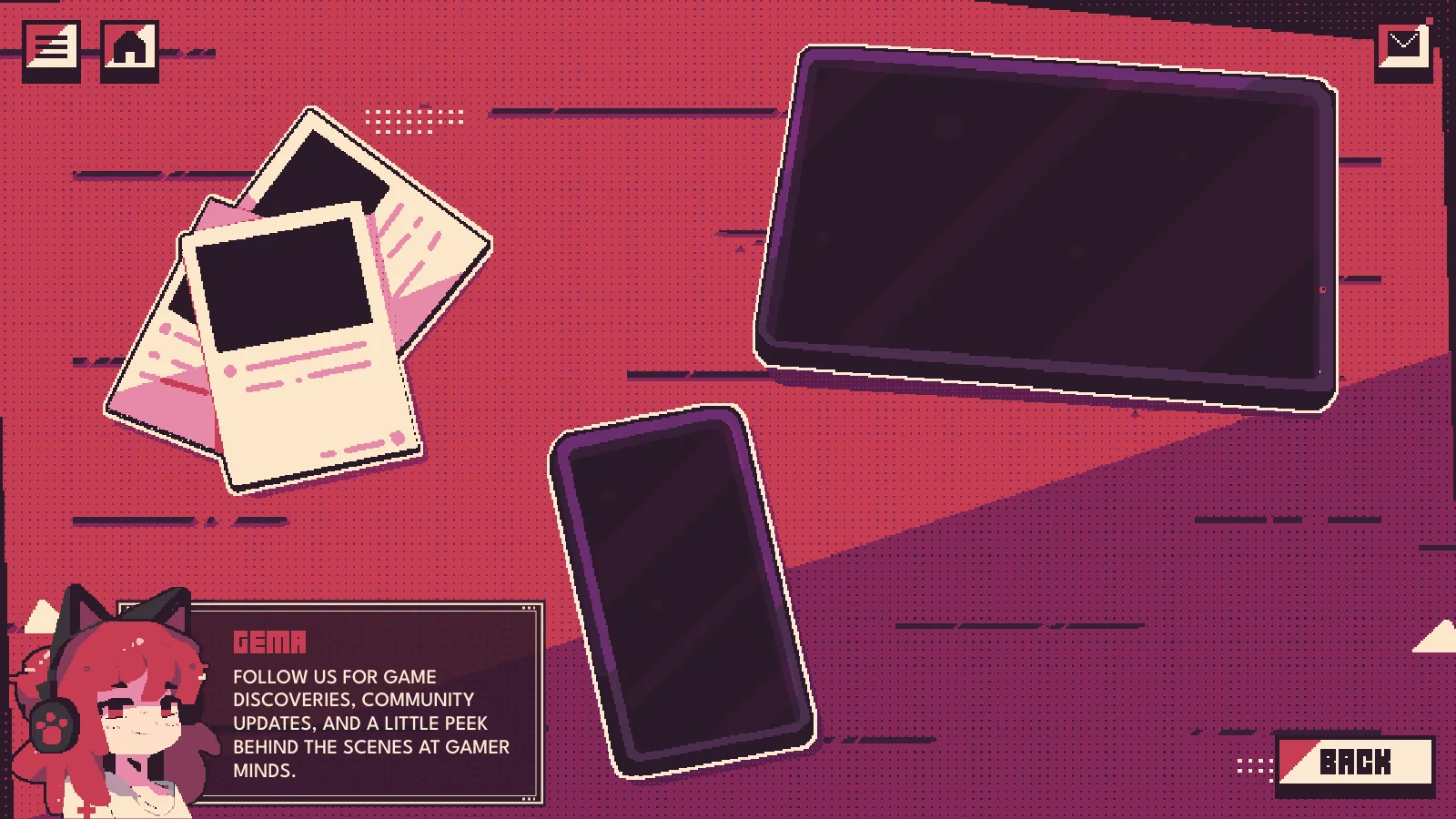
Doors, monitors and the handheld open the shelf, the process and the community.
04 — Leave
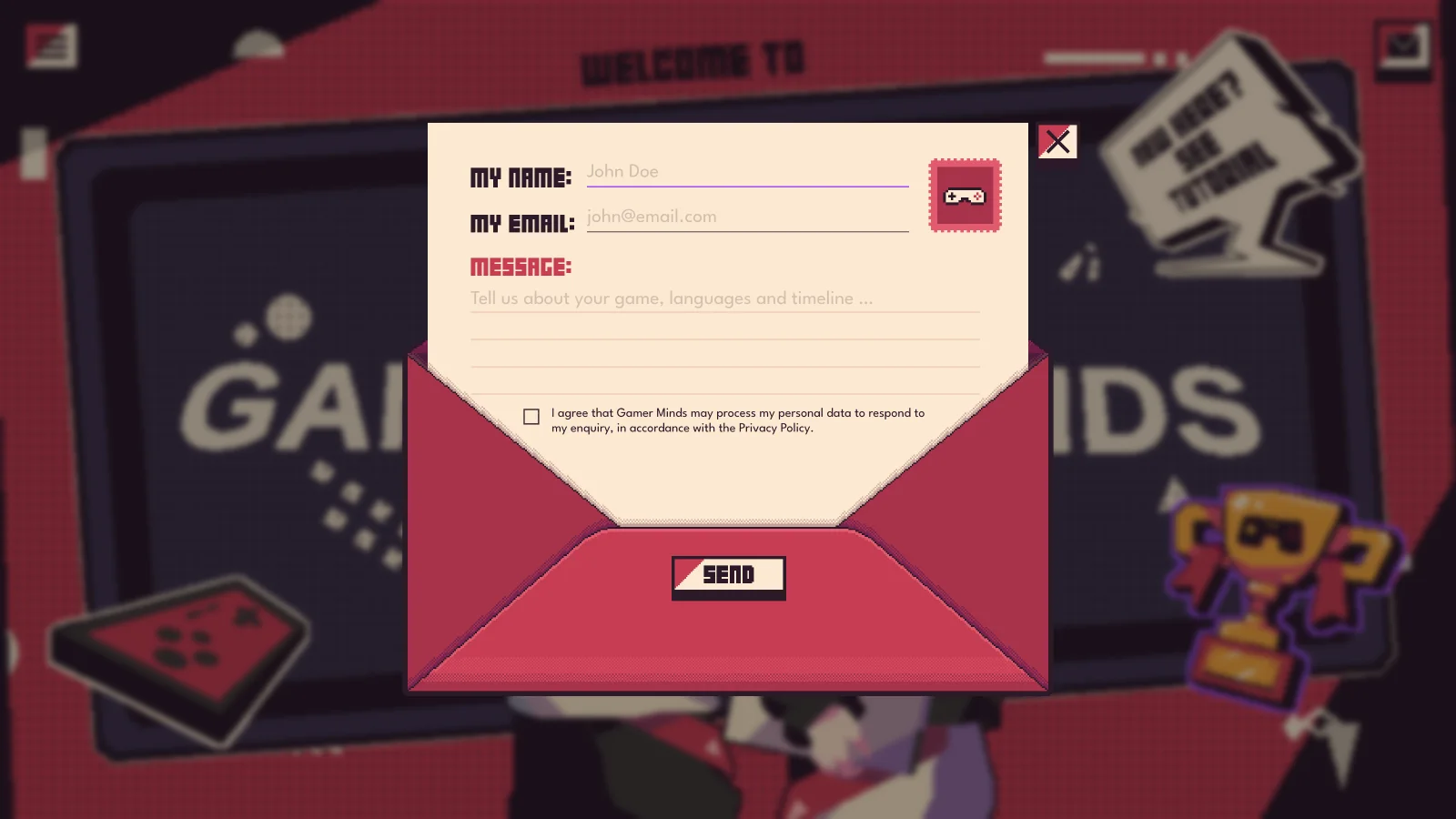
Each path ends at the door, with the envelope to get in touch.
06 — Motion system
Values from the build
07 — Inside the build
One canvas, four systems
Layer 00 — Surface
Move across the plate to X-ray it
A 1920 by 1080 composition is contain-fit into the window. Layers stack by render order instead of depth, so the art is drawn exactly as layered.
Characters are frame loops; the pixel-art rooms are upscaled on the GPU with nearest filtering so every pixel stays hard.
The canvas ignores the pointer. Hover and click run through one manual raycaster, so DOM buttons, dialogue and the scene never fight over input.
A scene controller loads the next room’s assets, holds the transition cover until they are ready, and keeps the address bar in step.
08 — The signature
The handheld
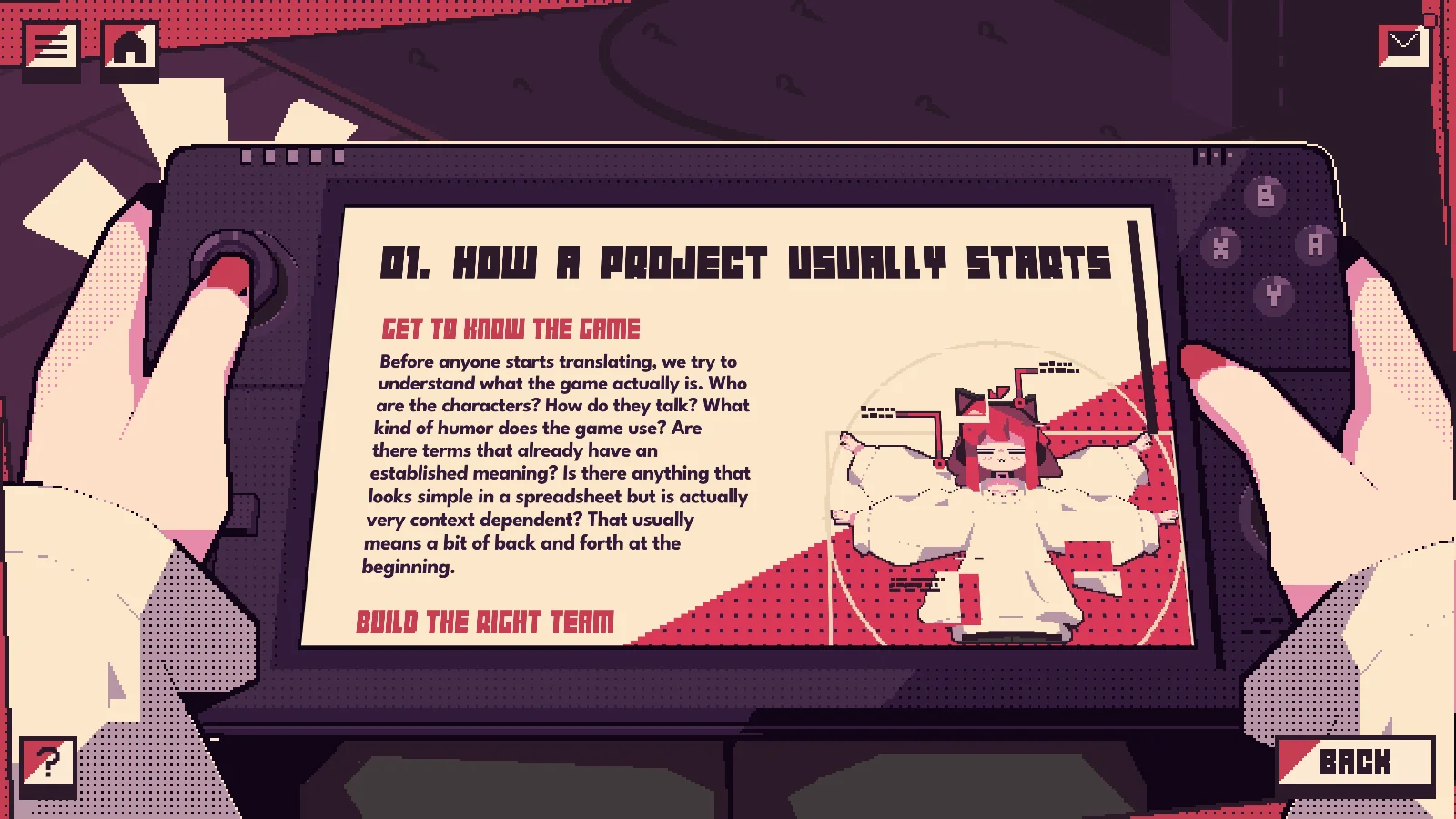
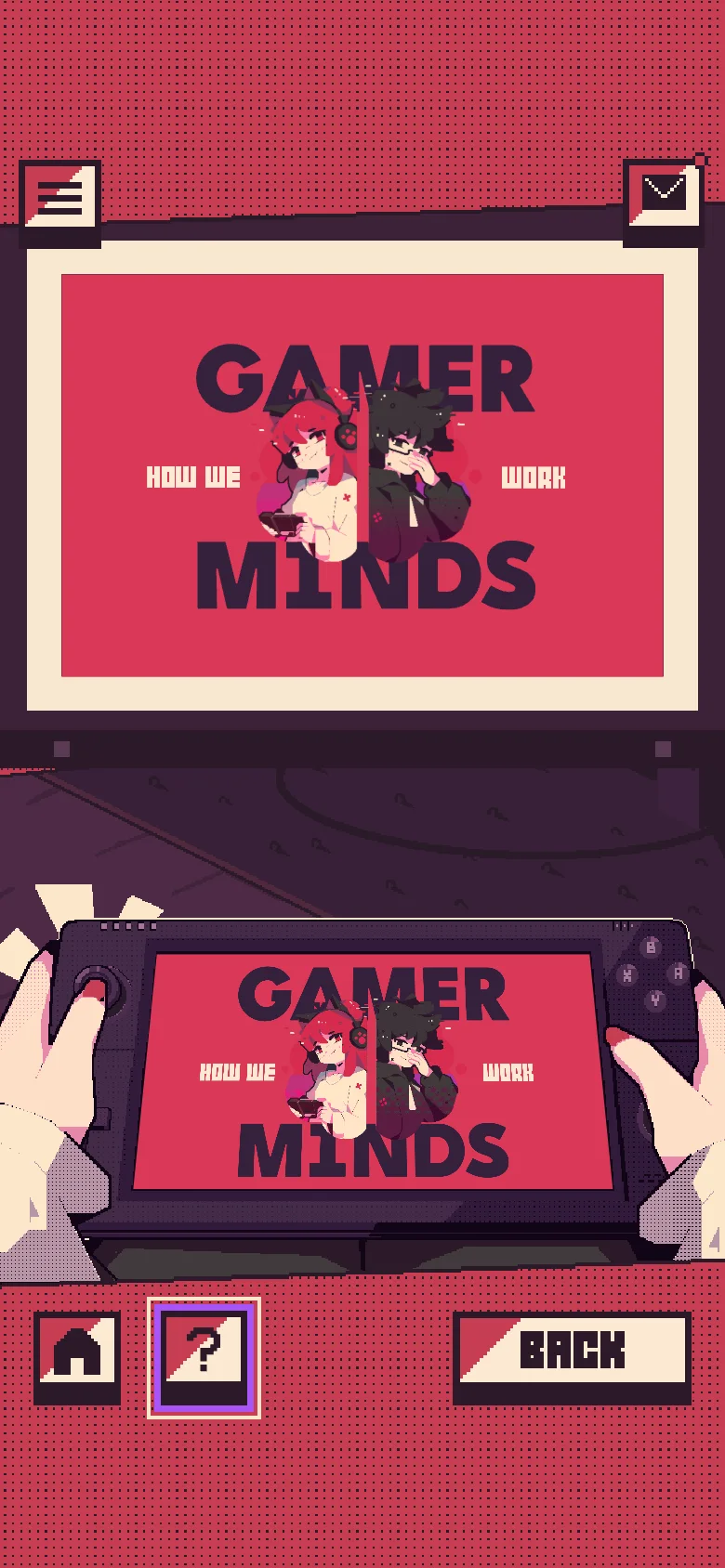
How the agency works is not a text page. It is a handheld the visitor holds: drag left and right to change slides, scroll to read down each one.
09 — Responsive
Re-staged, not scaled
Desktop — the landscape 1920 × 1080 stage, mouse parallax and hover.
Landscape or portrait, picked by aspect ratio, not device.
Swipe to the next room, swipe back, pull for Home, pan the shelf.
Phones load their own smaller texture variants of the scene art.
10 — Performance
Decisions, not dashboards
No lab scores are shown here — none were measured for this page, so none are claimed. What shipped are the decisions.
The device is placed in a tier and the pixel ratio follows it; a frame-time probe can only lower the tier.
Hover reactions are paused GSAP tweens played and reversed, outside React state.
Each room declares its own textures; the transition cover hides the load and the shader warm-up.
A service worker precaches the scene art, so a return visit starts from disk.
11 — CMS · life after launch
Studio ↔ scene
One Sanity document feeds the scene. Publishing in the Studio calls a signed webhook, and the live site picks the change up without a redeploy.
Content types
Covers
12 — The result
What shipped
The site, screen by screen
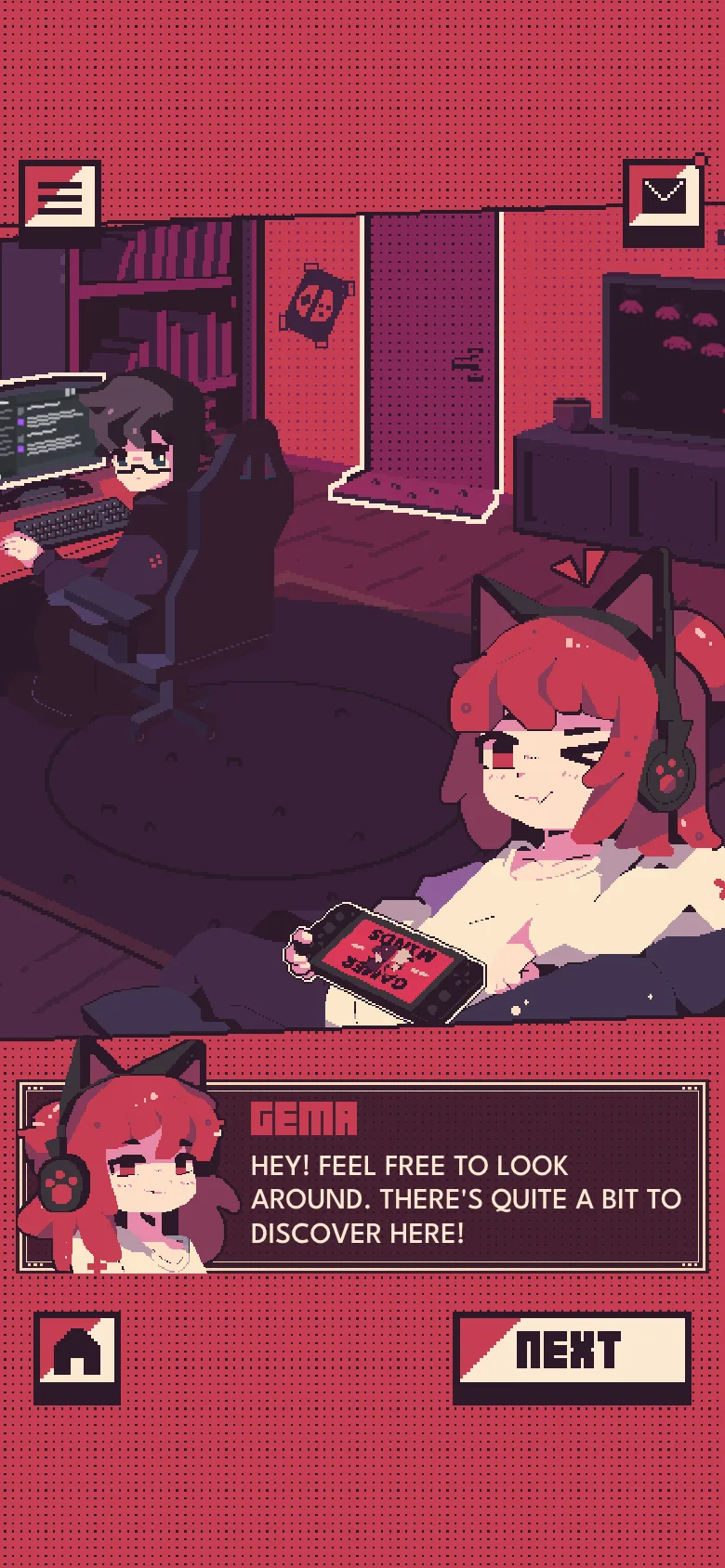
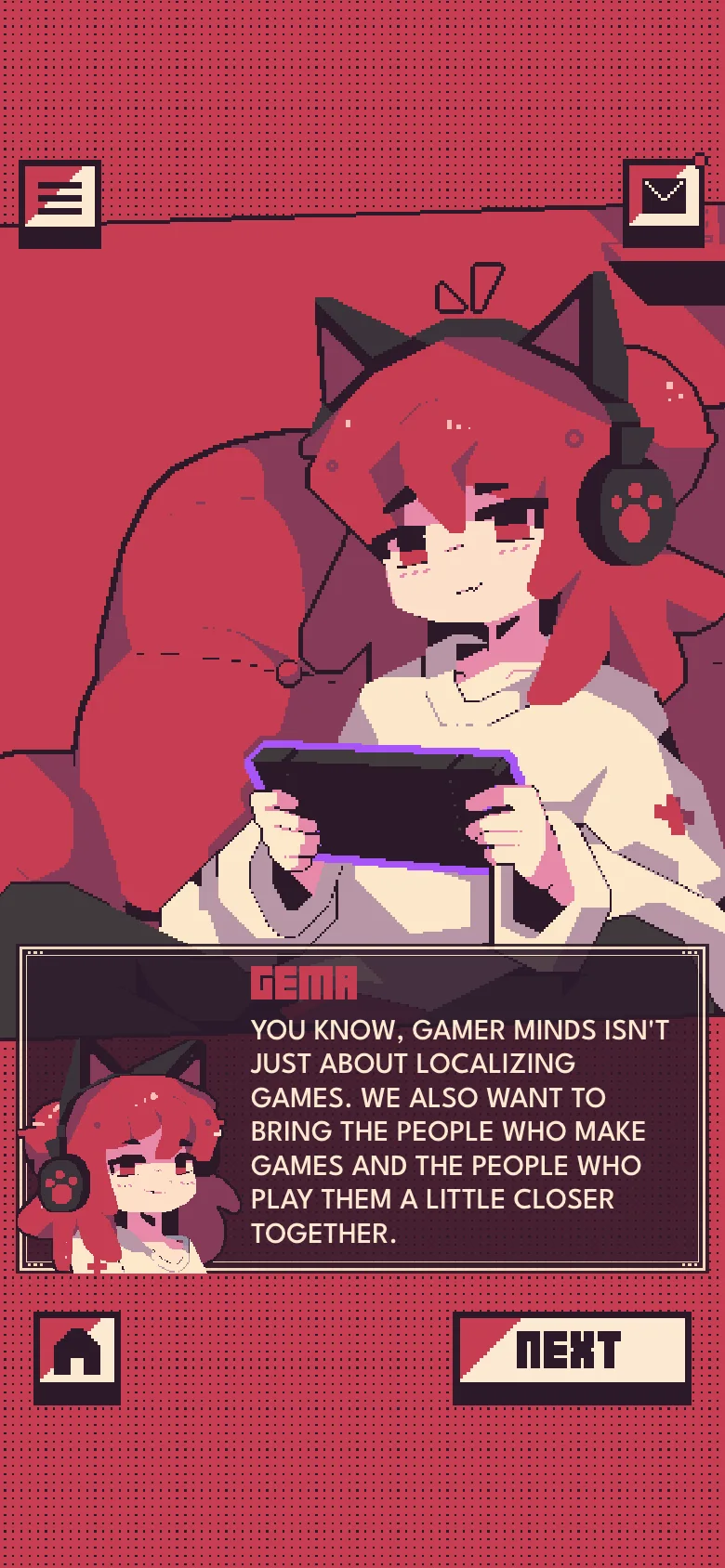
And on a phone

13 — Collaboration
Who did what
14 — My role
Exact responsibilities
The shared canvas, the fixed stage, layer ordering and the scene controller.
Sprite playback, hover growth, speech balloons and the dialogue box.
The pixel-stair and shutter wipes, gated on the next scene being ready.
The raycaster, the console swipe, the shelf and the touch gestures.
The portrait stage and the phone re-staging of every room.
The Sanity schema, Studio structure and the publish webhook.
15 — Technical index
Hover a technology — its layer lifts
Recorded on the live site
Moments, in motion
18 — Start
Studios · brands · founders